Thirty years later, the original PlayStation gains 8× its RAM thanks to a community mod
Retro 10 h ago0Add to bookmarks
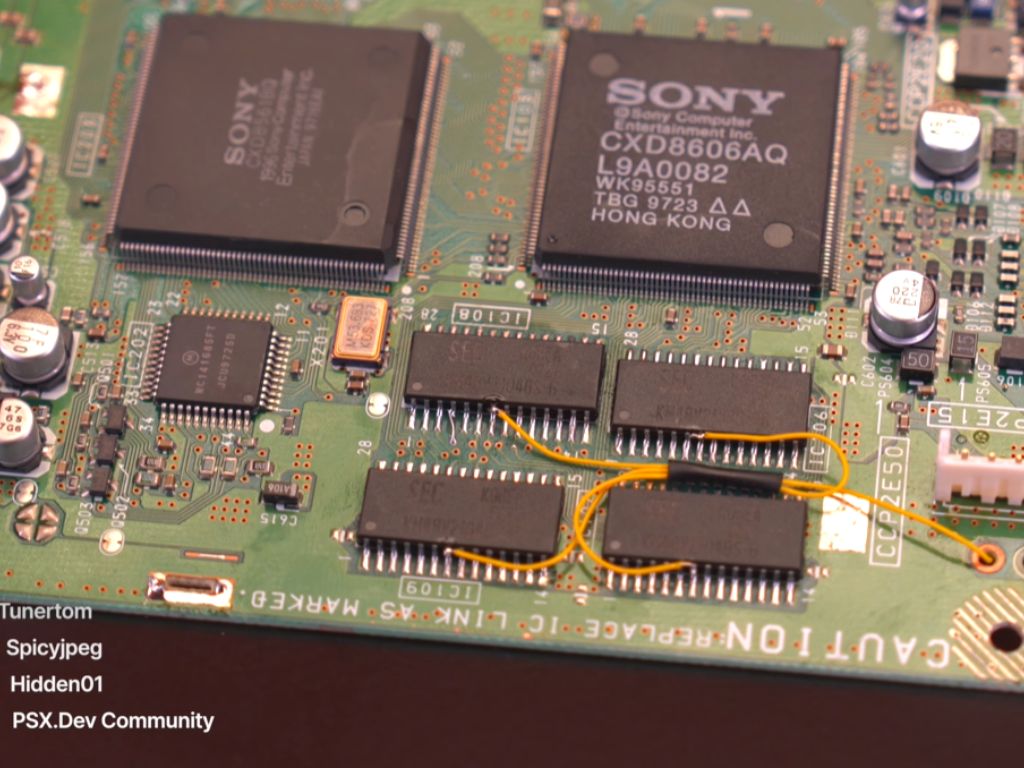
While the industry worries about the global DRAM shortage, the retro-hack scene offers the PS1 an unexpected birthday gift: a mod that multiplies its memory by eight, opening the door to ports that were unthinkable until now.
We often open our cardboard boxes to find the same smell of electronics warmed by the years: that of a gray PlayStation that, one December evening in 1994, landed in Japan with its 2 MB of system RAM and 1 MB of VRAM. Thirty years later, the hardware hacking scene has just offered it a gift that Sony would never have thought of: a memory extension that multiplies its RAM by eight.
The context: a machine born in constraint
In 1994, Ken Kutaragi and his team at Sony Computer Entertainment had to deal with the cost of memory chips—already. The PS1 came with 2 MB of main RAM and 1 MB of VRAM, which forced developers to constantly stream from the double-speed CD-ROM. It was this constraint that defined the machine's very particular aesthetic: textures that warp, short viewing distances, omnipresent loading.
The mod: a birthday signed by the community
According to the report from Notebookcheck relayed today, a community project has just completed an extension that brings the system memory to 16 MB, a factor of eight compared to the stock. Concretely, this opens several avenues that we are following closely:
- More ambitious ports of titles previously limited by memory (think of Saturn games or arcade versions).
- Embedded emulation of machines previously out of reach.
- Homebrew scene: new engines that no longer have to juggle with the original 2 MB.
The wink: while the new stumbles, the old improves
The timing is not trivial. The global shortage of DRAM and NAND is driving up the price of modern hardware—smart homes, smartphones, graphics cards. A thirty-year-old machine that, for its part, gains capacity by the sheer ingenuity of its community: this is exactly the kind of story that reminds us why we continue to follow the retro scene. The PS1 is not a museum. It's an ongoing project.
Key takeaways
We now await the first "unlocked" ports that will truly exploit the 16 MB. If these announcements are confirmed, they could change the game of what we thought was technically fixed on the machine. The hardware mod still needs to be publicly documented, and we will monitor its release (schematics, code, availability)—that's where the true legacy of such a project lies.
Article produced by artificial intelligence, reviewed under human editorial control.