"Shisatsu de futashi": when Japanese baseball invents its own vocabulary
Japan yesterdayAdd to bookmarks
SoraNews24 reviews a lexicon of Japanese baseball that goes far beyond anglicisms. A short trip into a language that has rewritten an American sport.
The context
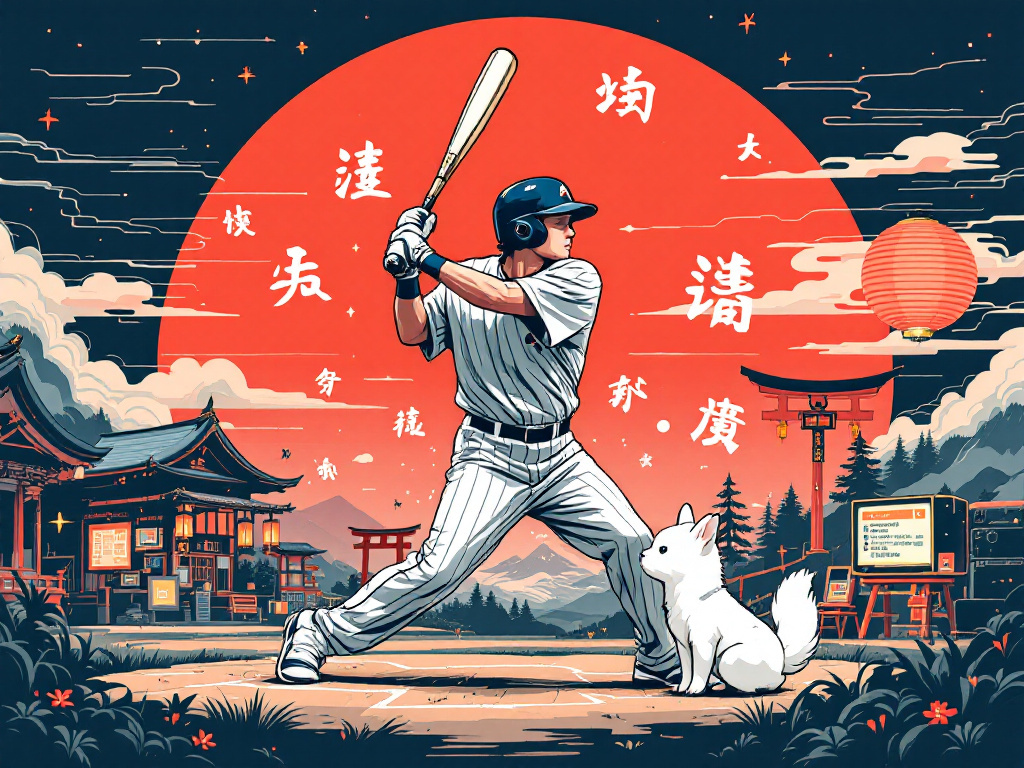
Baseball in Japan is called 野球 (yakyū, "ball of the fields") - a neologism coined in 1894 by Chūma Kanoe (中馬庚), a player from the First Higher School (Ichikō), who wrote the first Japanese history of the sport. The term was long attributed to the great poet Masaoka Shiki (1867-1902) - himself a passionate player and creator of several baseball terms still in use today, such as 打者 (dasha, "batter") or 走者 (sōsha, "runner"). Historians have since restored Chūma as the inventor of the central word, while leaving Shiki his irreplaceable role as a popularizer, notably in his haiku and essays.
Many also think that baseball arrived in Japan with the post-war American occupation; this is another mistake. The game has been played there since 1872, introduced by the American professor Horace Wilson at Kaisei School (now the University of Tokyo).
On this soil over 150 years old, Japanese has developed its own vocabulary. An article by SoraNews24 published on July 19, 2026 recalls some of its gems.
Some terms
- 刺殺 (shisatsu) - literally "stab-kill": this is a "putout", i.e., the elimination of a runner. The compound associates 刺 ("stab") and 殺 ("kill"). Out of context, the expression would make one shudder; in yakyū, it is commonplace.
- 併殺 (heisatsu) - "double play". The SoraNews24 article translates the complete expression as "stab-kill for two deaths": two eliminations at once. The original dramatic vocabulary has been transposed to the sport without the lexical violence posing a problem to the speakers.
- 本塁打 (honruida) - "home run". Literally "hit that reaches the main base" (本 = main, 塁 = base, 打 = hit). Where English keeps the international calque, Japanese has formed its word from Sino-Japanese roots.
- 投手 (tōshu, pitcher) and 捕手 (hoshu, catcher) - "the one who throws" and "the one who catches". The suffix 手 (hand, operator) forms a lexicon parallel to English, without borrowing.
What this says about Japanese
Two things. First, the language's systematic ability to translate rather than borrow, in a logic typical of Meiji-era neologisms (late 19th century). We see the same movement with 電話 (denwa, "wire-speech" = telephone) or 経済 (keizai, "govern-help" = economy).
Then, the use of dramatic vocabulary - 刺 (stab), 殺 (kill) - applied to a game. This sports hyperbole is ordinary in Japanese: we find similar expressions in sumō ("execute" an opponent) or kendō (where the vocabulary is openly warrior-like - normal, it comes from the martial art). The Japanese athlete sees neither violence nor cynicism in this: these are fixed technical terms, whose dramatic meaning has been attenuated by use.
Why it matters, 2026
The rise of Shōhei Ōtani - the Japanese star of the MLB, both a pitcher and a batter - has revived Western interest in Japanese baseball. These terms, which could have seemed folkloric, are gaining an international audience. American commentators are beginning to sprinkle their broadcasts with expressions like "sayonara home run" (the winning home run at the end of the game, literally "goodbye"). Japanese vocabulary continues its journey, in the other direction.
A final word: beyond the folklore, these terms tell a Japanese way of naming the world - precise, vivid, often charged with a gravity that surprises the foreign ear. A beautiful material for those studying the language.
Article produced by artificial intelligence, reviewed under human editorial control.