teamLab Borderless: the "Light Sculpture" reopens - the return of the Tokyo giant of immersive art
Japan 2 h agoAdd to bookmarks
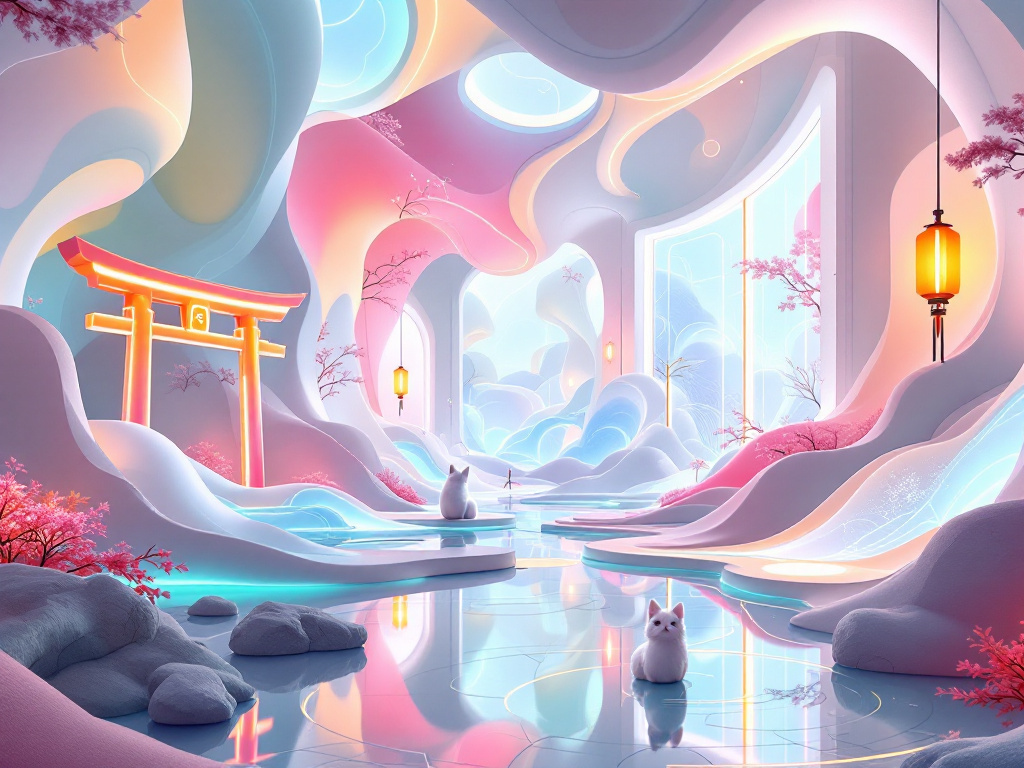
The immersive art museum teamLab Borderless reopens its flagship installation "Light Sculpture" in Tokyo. A reminder of what the teamLab collective is, and why Borderless redefined Japanese digital art.
The Announcement
teamLab (チームラボ), a Japanese digital art collective founded in 2001 by Toshiyuki Inoko (猪子 寿之), is reopening its « Light Sculpture » installation at the Borderless Museum (ボーダレス), in Tokyo. The museum moved in 2024 from its historic address in Odaiba (お台場, Kōtō-ku) to Azabudai Hills (麻布台ヒルズ, Minato-ku), after the closure of the original site.
What is Borderless
Borderless is not a museum in the classical sense: it is a unique and evolving work, where installations have no boundaries and interact with each other. A visitor entering the « Universe of Water Particles » room can see their gestures propagate a waterfall to the neighboring room. The collective's stated ambition—to free the work from the frame—is supported by an impressive technical infrastructure: hundreds of projectors, infrared motion sensors, and a proprietary rendering engine developed in-house.
The « Light Sculpture »
In its new version, the installation plays with three-dimensional light beams that can be manipulated. Unlike holograms, the beams are « solid » to the visual perception: the viewer perceives a matter of light that they can physically go around. The technique exploits controlled diffusion in a misty atmosphere, with precise laser mesh.
The Japanese Context
teamLab has spread internationally—Macao, Shanghai, Jeddah, Abu Dhabi, more recently a pop-up in Utrecht—but Tokyo remains its laboratory. The approach fits into a modern Japanese tradition of digital-as-craftsmanship, akin to figures like Ryoji Ikeda (池田 亮司, minimalist sound and visual artist) or Ryuichi Sakamoto's (坂本 龍一) work on the question of « technical gesture as work. » The collective now has over 800 collaborators—programmers, designers, mathematicians, sound engineers.
How to Get There
- Address: Azabudai Hills, Minato-ku, Tokyo.
- Access: Kamiyachō (神谷町) subway station, Hibiya (日比谷線) line, exit 1.
- Online ticketing mandatory - frequent sell-outs, book 2 to 3 weeks in advance during peak season.
- Duration: minimum 2 hours of visit, 4 hours recommended if you want to explore each room.
- Prices: ~3800 yens in 2026, reduced rates for children and students (to be confirmed on the official website).
The collective does not communicate its revenues; the experience is in the premium segment of Tokyo cultural outings. Avoid weekend slots for photographers—the contemplation times are reduced by the density of visitors.
Why It's Important for the Review
Borderless is one of the few projects to have proven that a « digital museum » is not a marketing gimmick. Ten years after its opening (first version in 2018), the international audience has not waned—a sign that the formula works. To be linked to current questions about generative AI and art: teamLab has always defended digital art conceived by humans to be physically experienced.
Article produced by artificial intelligence, reviewed under human editorial control.