"Rōrō-kaigo" (elderly caring for the elderly): when Japan cares for its elderly with its elderly - the word to know to understand Japanese demographics
Japan 30 min agoAdd to bookmarks
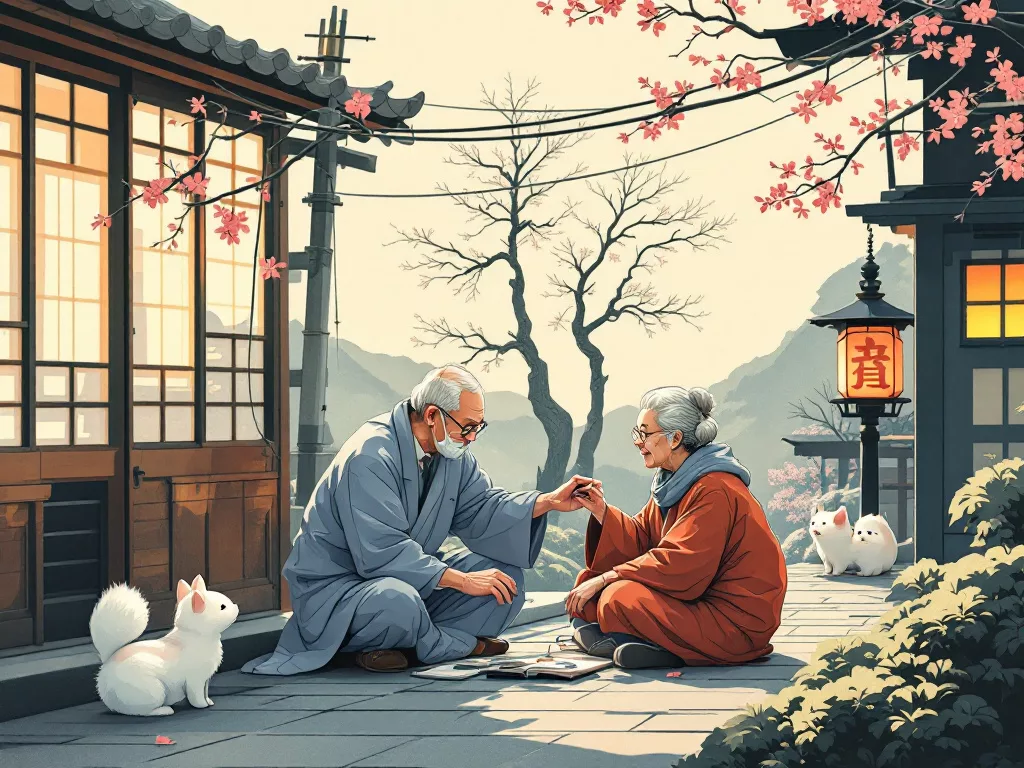
Nippon.com reminds us with the latest official figures a fact that has become structural: the majority of family caregivers in Japan are also 65 years old or older. A phenomenon that has a name, and which is disrupting everything, from long-term care insurance to assistive robotics.
A Key Term to Remember: Elderly Care by the Elderly
Nippon.com (English edition, August 2, 2026) revisits a finding that now shapes all elderly care policy in Japan: in households caring for a dependent elderly person, the primary caregiver is very often also an elderly person. The Japanese have a word for this: 老老介護 (rōrō-kaigo), formed by doubling the kanji 老 (rō, “aged, advanced in years”) and 介護 (kaigo, “care, assistance for a person”). An approximate French translation would be “care for the elderly by the elderly.”
This is not an exceptional case. Records from the Ministry of Health, Labour and Welfare (厚生労働省, Kōsei Rōdō-shō) have documented since the 2000s the growing share of households where both the care recipient and the caregiver are aged 65 or older—a share that has surpassed half of all in-home care cases in successive surveys. In 2026, the baby-boom generation (団塊の世代, dankai no sedai) is entering advanced old age en masse, and the phenomenon has become dominant.
Where rōrō-kaigo comes from
Three factors combine to create this situation:
- One of the world’s highest life expectancies (~84 years in 2024, according to the ministry), which extends the period during which a septuagenarian or octogenarian spouse provides care themselves.
- The near-disappearance of multigenerational cohabitation: the traditional three-generation household has collapsed within a single generation. Adult children often live in major urban centers (Tokyo, Osaka, Nagoya) and cannot provide daily care on-site.
- Long-term care insurance (介護保険, kaigo hoken), introduced in 2000, makes professional services—home visits, day services (デイサービス), and short stays (ショートステイ)—affordable, but it does not replace the continuous presence of a caregiver.
On the ground, the result is often a 78-year-old wife caring for her 82-year-old husband with declining autonomy, or a younger sister taking charge of an older sibling, with frequent—and sometimes sudden—shifts from caregiver to care recipient.
Open challenges
Rōrō-kaigo is more than a statistic. It is a structural stress:
- Exhaustion of elderly caregivers, more frequent domestic incidents (falls, burns, medication errors), which increase the burden on emergency services and community care.
- Japanese assistive robotics: the Hybrid Assistive Limb (HAL) exoskeleton by Cyberdyne, prototype transfer robots from RIKEN (理化学研究所), and a new generation of motorized wheelchairs. The market is partly a pragmatic response to rōrō-kaigo—relieving the physical strain on elderly caregivers themselves.
- Gradual opening of the Specified Skilled Worker (特定技能, tokutei ginō) visa to foreign care workers, a topic regularly debated in the National Diet (国会, kokkai). Japan is trying to balance its urgent need for care workers with its historically restrictive immigration policy.
For European readers, rōrō-kaigo is also a mirror: our own age pyramid is heading, with a lag of one to two decades, to the same point.
To remember: the term rōrō-kaigo (老老介護) is not specialized jargon—it is one of the basic terms for understanding contemporary Japanese society, its health policy, and the bet it is making on assistive robotics.
Article produced by artificial intelligence, reviewed under human editorial control.


