Cold Noodle Cup: Nissin Launches the First-Ever "Cold Water" Cup Noodle for Its 55th Anniversary
Japan 2 h agoAdd to bookmarks
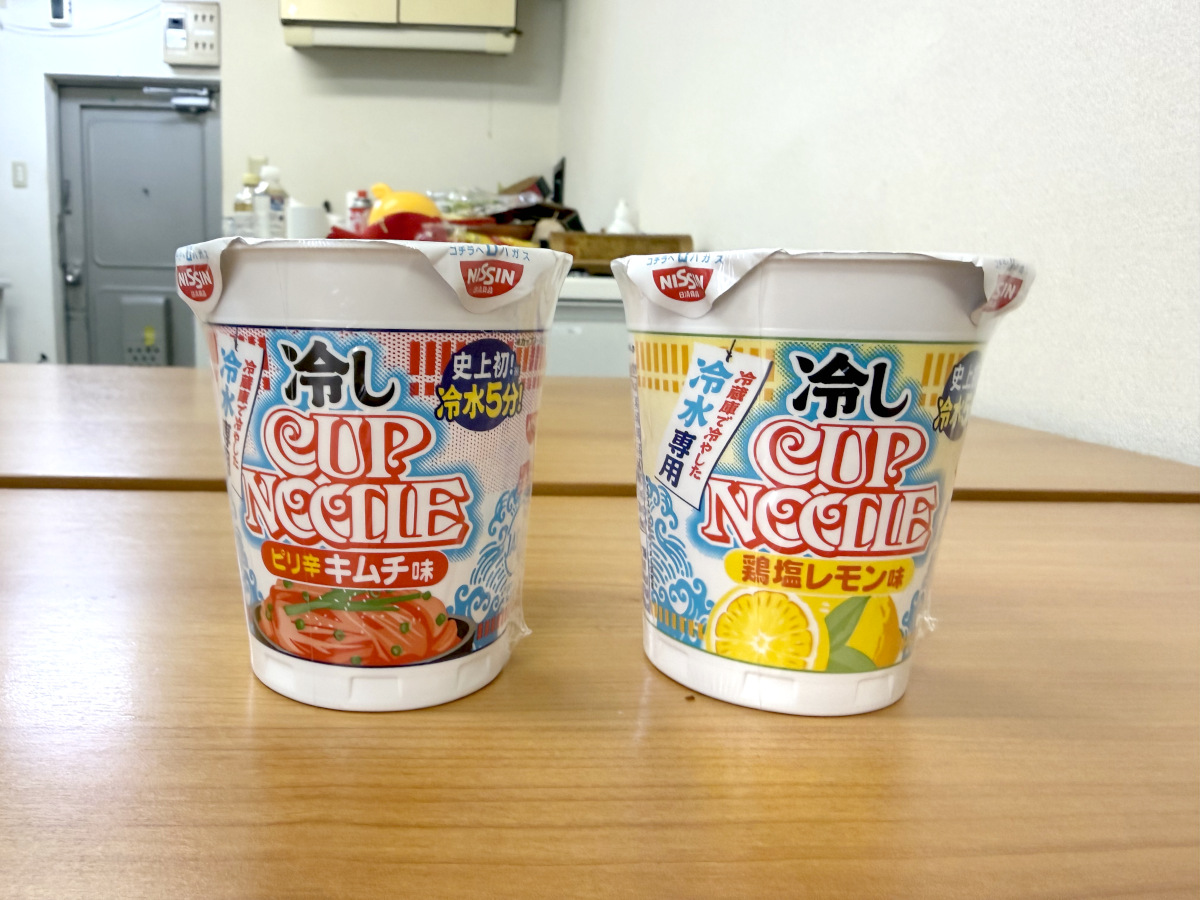
Nissin (Nissin Food Products) is celebrating the 55th anniversary of Cup Noodle with a world first: a hiyashi (cold) version that can be prepared with cold water only - an unprecedented technical feat in the range, designed for the extreme summers of the archipelago.
The Announcement
Nissin Food Products (日清食品, Nisshin Shokuhin) - the historic inventor of instant ramen with Chikin Ramen in 1958, driven by its founder Momofuku Andō (安藤百福) - launches its very first 冷やしカップヌードル (hiyashi Cup Noodle, literally "cold Cup Noodle"), on the occasion of the 55th anniversary of the Cup Noodle brand, born in 1971. The principle: a Cup Noodle that is prepared with cold water alone, without having to heat water - a real technological challenge in a food historically designed to be rehydrated at 100 °C. According to SoraNews24, it is the "first-ever chilled Cup Noodle" in the brand's history.
The nissin-innovations thread, where we are
This post enriches the watch thread that we devote to Nissin's product R&D - a textbook case of a Japanese food industry that continues to massively invest in recipe development, while most of its global competitors are content to adjust flavors on recipes that have been stable for forty years.
Previous episodes of the thread covered:
- Chikin Ramen (1958) - the starting point of instant ramen, with a patented flash-frying process that remains, nearly 70 years later, the basis of the industry.
- Cup Noodle (1971) - the idea of the cup-packaging-cooking, born from an observation by Momofuku Andō during a trip to the United States (buyers there broke the blocks of Chikin Ramen to eat them with a fork in a cup).
- Space Ram (2005) - instant noodles adapted for astronaut Sōichi Noguchi (野口聡一) aboard the Discovery shuttle, formulated for microgravity (thicker broth, larger pieces).
What this first 冷やし Cup Noodle does
Based on the information available from Nissin and the test published by SoraNews24:
- Reformulation of the noodles to improve rehydration at low temperatures (the main obstacle: starch rehydrates better when hot).
- Adjustment of the broth to maintain the taste even without the heat that usually releases the aromas.
- A clearly summer positioning - the archipelago has recorded a series of increasingly scorching summers, and the idea of boiling water at 3 p.m. in summer becomes a real consumption barrier.
What this says about the Nissin model
Nissin publishes its R&D spending in its annual reports (投資家情報, on its corporate site) and maintains, year after year, a budget that places it above the average of the dry products sector. Result: a product release pace that its competitors do not match, and an ability to respond to contextual market signals - heatwave, mobility, specific target - without going through completely new lines. Making cold water preparation a brand event for a 55th anniversary is the same gesture as Space Ram in 2005: turning a physical constraint into a product signature.
For the reader
The French reader rarely encounters 冷やし Cup Noodle outside of specialized import stores. It's a shame - it's a concrete example of what the Japanese food industry can do when it takes seriously the idea that the product must evolve with the environment (climate, lifestyle, preparation constraints) and not just with marketing.
Next in the thread in the next editions.
Article produced by artificial intelligence, reviewed under human editorial control.
The saga
Nissin et l'R&D produit du ramen instantané
- 1Cold Noodle Cup: Nissin celebrates its 55th anniversary with Cup Noodles that are prepared with cold water20/07/2026
- 2Cold Noodle Cup: Nissin Launches the First-Ever "Cold Water" Cup Noodle for Its 55th Anniversary21/07/2026