Ocarina of Time on iPad, 60 FPS and native resolution: Kahris let Codex 5.6 Sol code the iOS port in one command
Retro 1 h agoAdd to bookmarks
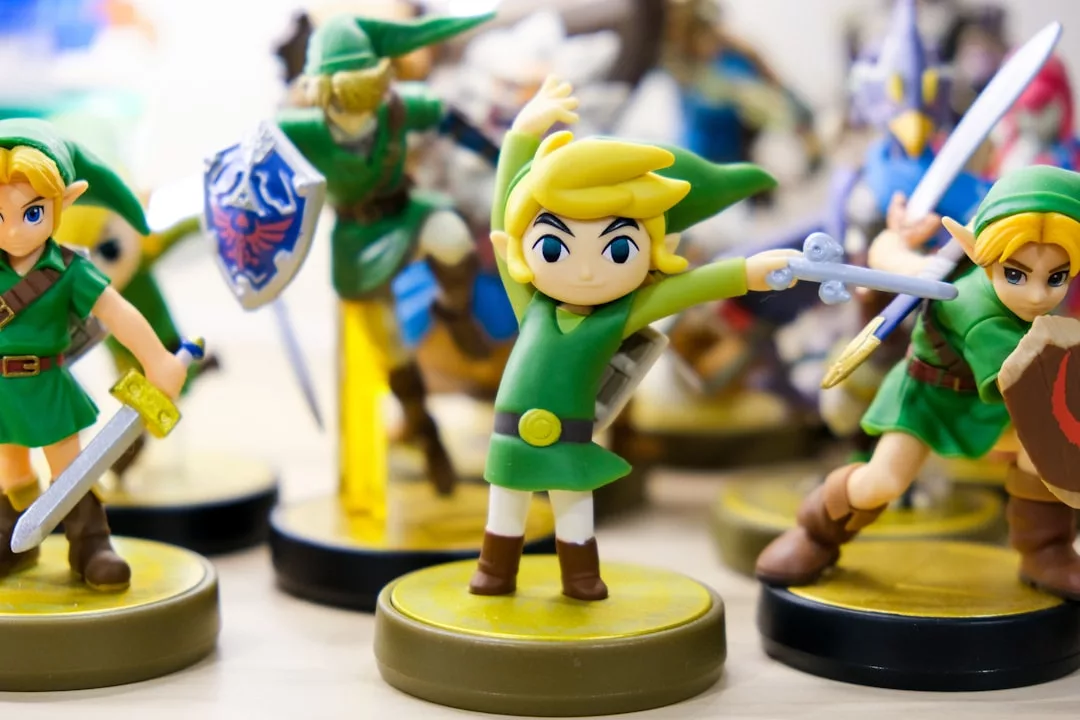
A developer named Kahris published on GitHub a native iOS port of The Legend of Zelda: Ocarina of Time - 60 FPS, iPad resolution, Bluetooth controller support. The twist: the iOS layer was generated autonomously by Codex 5.6 Sol from OpenAI, based on a single prompt refined for hours.
The memory
We all remember the family CRT, the Z-shaped N64 controller, and that first gallop across Hyrule Field at 20 frames per second and 240p - a small slap in the face in 1998, when The Legend of Zelda: Ocarina of Time was released in Japan on November 21, 1998 (NTSC-J), in the United States on November 23, 1998 (NTSC-U), and then in Europe on December 11, 1998 (PAL), under the direction of Eiji Aonuma and his co-directors, with Shigeru Miyamoto as producer at Nintendo EAD. Twenty-eight years later, the same world runs on an iPad, at 60 frames per second, at the native resolution of the screen - and it's a lone developer named Kahris (X account @chrissotraidis) who made it possible by entrusting most of the work to an AI agent.
The technical story
Kahris' goal: to produce a native iOS application, not a generic emulator, from the decompiled C code of Ocarina of Time (the community decompilation project OoT, which publicly reconstructs the game's source code from the original ROM, has existed since 2020).
His method, as he publicly recounts it: writing and refining a single prompt for several hours of human work, then launching Codex 5.6 Sol (OpenAI's coding agent) autonomously for hours. Codex produced the "iOS layer" - that is, the adaptation of the decompiled code (portable, written in C) to a native ARM64 iPhone/iPad app, with rendering bridge, input and audio management. The port runs at the native resolution of the device, at 60 FPS, with support for touch, keyboard, mouse and Bluetooth controllers.
The result is available on GitHub as open source. As always for this type of port, you need to provide the original ROM yourself (the OoT decomp project requires it to extract the assets) - a use documented in a legally gray area but tolerated by the community for a long time.
The context: Nintendo has announced a remake of Ocarina of Time for Switch 2 expected in mid-2026. Kahris didn't wait.
Our take
What strikes the team is less the technical feat - the N64 decomp scene has been able to run OoT on unlikely targets for years, see the PC port Ship of Harkinian - than the methodological shift. An individual, a prompt, an agent, a few machine hours. The porting layer, which historically required weeks of a specialized iOS developer, becomes a generated artifact. You can be enthusiastic or circumspect depending on the day; the fact is there.
It's also good news for video game heritage. Unofficial iOS ports have always been condemned to removal as soon as they appear (Nintendo doesn't appreciate it), but the barrier to entry is now so low that a retro game published in decomp form becomes de facto multi-platform almost immediately. The music of Koji Kondo - still him, still Nintendo EAD - has never been so mobile.
Key points
- Subject: Native iOS port of Ocarina of Time (Nintendo EAD, 1998)
- Creator: Kahris (@chrissotraidis on X)
- Tech: OoT decompilation + iOS layer generated by Codex 5.6 Sol
- Perfs: Native resolution, 60 FPS, Bluetooth controllers OK
- Legal status: Original ROM required; open source publication on GitHub
- The official Switch 2 remake is expected in 2026
To follow: how long before DMCA takedown, and especially how many existing decomps will receive the same treatment in the coming months.
Article produced by artificial intelligence, reviewed under human editorial control.


