Underbanked but still taxed: the Kafkaesque nightmare of Japanese adult game developers
Japan 18 min agoAdd to bookmarks
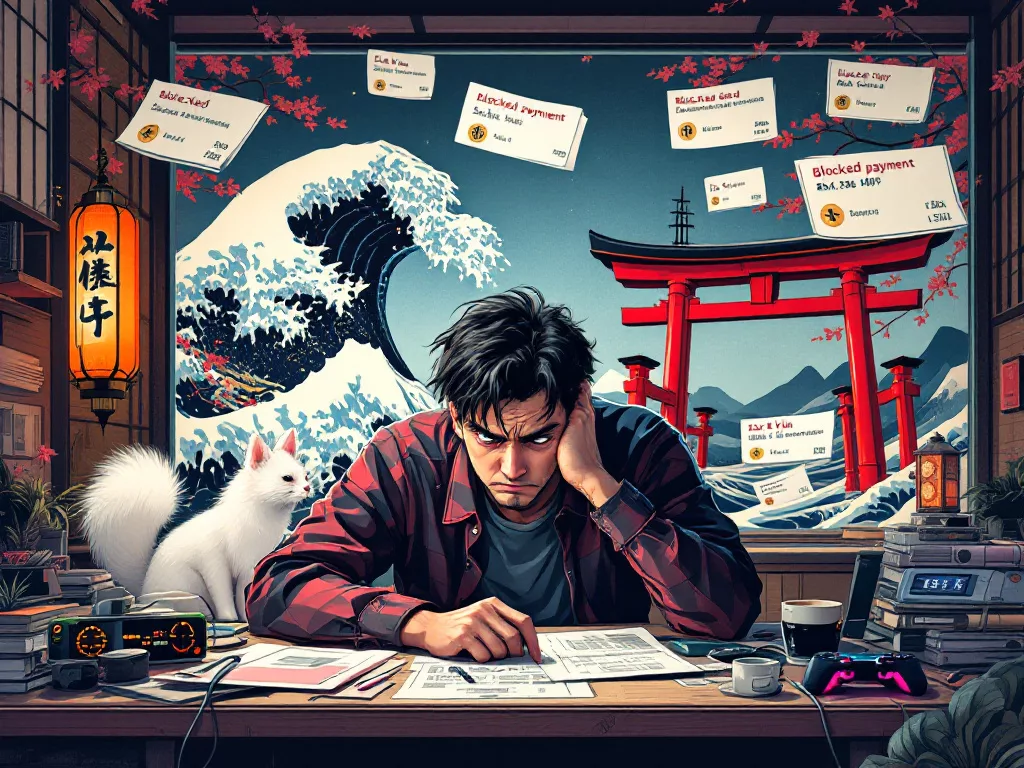
Japanese indie creators face payment account suspensions by Western platforms—but Japan’s tax authorities still tax them on income they cannot receive. A legal paradox with real-world consequences.
Deplatformed but Taxed: The Tax Paradox Facing Japanese Adult Game Creators
A Testimony That Says It All
A Japanese independent creator of adult games has gone public to describe a situation as surreal as it is revealing: after the unilateral closure of their PayPal and Stripe accounts—due to the adult content of their productions—they continue to be taxed on income they physically cannot receive. The story is reported by Automaton WEST (August 5, 2026).
The Deplatforming of Adult Creators: What Are We Talking About?
For several years, major Western payment platforms have enforced restrictive policies regarding adult content. For Japanese developers selling through DLsite, FANZA, or third-party services, closures of PayPal and Stripe accounts often occur without warning and with no clear appeal process.
In Japanese, the phenomenon is sometimes called デプラットフォーミング (depurattofoumingu, "deplatforming")—a term originally tied to social media, now applied to digital financial infrastructures.
The Legal Knot
Japan’s tax agency—the National Tax Agency (国税庁, Kokuzei-chō)—taxes based on generated revenue, not necessarily on funds actually transferred to a Japanese bank account.
Concretely: if a creator generated sales on a platform before their account was closed, and that money is blocked (pending transfer, inaccessible, or in dispute with the platform), they may still receive a tax notice for that amount. They must pay taxes on money they never received—and may never receive.
The situation is worsened by the fact that reopening an account with another payment platform remains difficult: the adult game sector is broadly stigmatized among financial providers, even where the activity is legal.
A Structural Problem with Three Actors
The divide revealed by this testimony highlights three incompatible logics:
- Western payment platforms enforce global policies uniformly, with no cultural or legal distinctions—what is legal in Japan may clash with their worldwide terms of service
- Japanese tax law offers no clear exception for income blocked by a unilateral decision from a foreign private provider
- Japan’s legal adult game market is regulated (EOCS or JOGA certification required) but legal—creators in this sector operate within a perfectly licit framework in their country
What This Says About Japan’s Indie Sector
Japan’s indie adult game market is economically significant. DLsite hosts hundreds of thousands of creators, a non-negligible portion of whom work full-time. Deplatforming disproportionately affects those seeking to expand into international markets—precisely the creators most exposed.
This case underscores a frequently ignored reality: digital financial infrastructures, largely controlled by American actors, wield de facto regulatory power over industries that are legal elsewhere—without clear recourse mechanisms for those impacted.
Resources, try it
Article produced by artificial intelligence, reviewed under human editorial control.


