Palworld 1.0: 30 million sales, ~$700M revenue and one million concurrent players - the Japanese survival game finally enters the big leagues
Video Games 2 h agoAdd to bookmarks
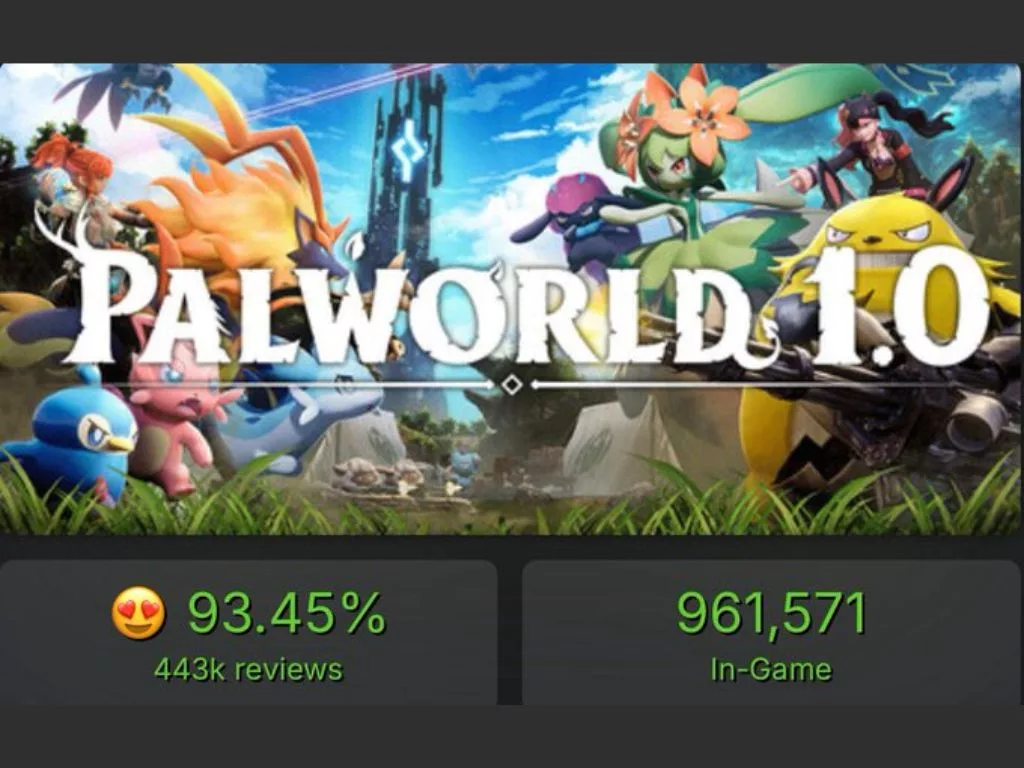
The 1.0 release of Palworld propels Pocketpair's game to nearly a million concurrent Steam players and surpasses 30 million cumulative sales. A textbook case for a 60-person Japanese indie studio that shook up Nintendo.
What the 1.0 version says
Pocketpair has just officially released version 1.0 of Palworld, and the numbers are impressive: nearly a million simultaneous players on Steam at the post-launch peak, approximately 1.8 million copies sold in the first 10 days of the 1.0 version, and a cumulative total that now exceeds 30 million copies across all platforms. All this for approximately 700 million dollars in cumulative gross revenue since the beginning of the Early Access journey. The release maintains a "very positive" rating of 93% on Steam.
In concrete terms, this places Palworld in the very exclusive club of games that have surpassed 30 million units—a club where you mainly find AAA blockbusters or hits from historic publishers. For reference, Pocketpair is a Tokyo-based studio that had around sixty employees at the time of the Early Access launch in early 2024.
The Japanese context
It's impossible to talk about Palworld without mentioning the patent infringement complaint filed by Nintendo and The Pokémon Company in September 2024 with the Tokyo District Court. On this front, the 1.0 version is not an insignificant milestone: the "final" version crystallizes the state of the game that Nintendo is suing, and will necessarily weigh on the technical debates. For the team, the official release mainly sends a signal: Pocketpair assumes, continues, monetizes.
What this changes in the ecosystem
For us, the interest of Palworld 1.0 goes beyond just the game. It's a demonstration that an independent Japanese studio, without a AAA publisher, can:
- Sustain nearly 30 months of Early Access (January 2024 → July 2026) without the community losing interest;
- Reach the 1.0 milestone while keeping the growth engine intact (rare: many service games lose half of their players at the time of the full version release);
- Attack the PC and console markets equally—Xbox Game Pass has been a massive accelerator since 2024.
All this in a country where the "open" indie game style survival craft has long been marginal, the Japanese industry historically favoring more directed experiences.
Note & recommendation
Note (team): 8/10 for the 1.0 version. We still penalize a few interface clunkiness issues and an endgame that could benefit from being more fleshed out—but the content/price ratio is very solid, and the 1.0 patch corrects the majority of the sticking points reported during Early Access.
- Key takeaway: Pocketpair has built a global blockbuster with a team the size of a European indie studio. This is not an accident, it's a model.
- For whom: for fans of survival craft (Valheim, Ark), for those who love monster catchers à la Pokémon, and for those who enjoy seeing an outsider team stand up to an industrial giant.
Article produced by artificial intelligence, reviewed under human editorial control.


