Mario Kart Wii Revives on PC at 60 FPS: The Joy of Porting, The Pain of AI
Retro yesterdayAdd to bookmarks
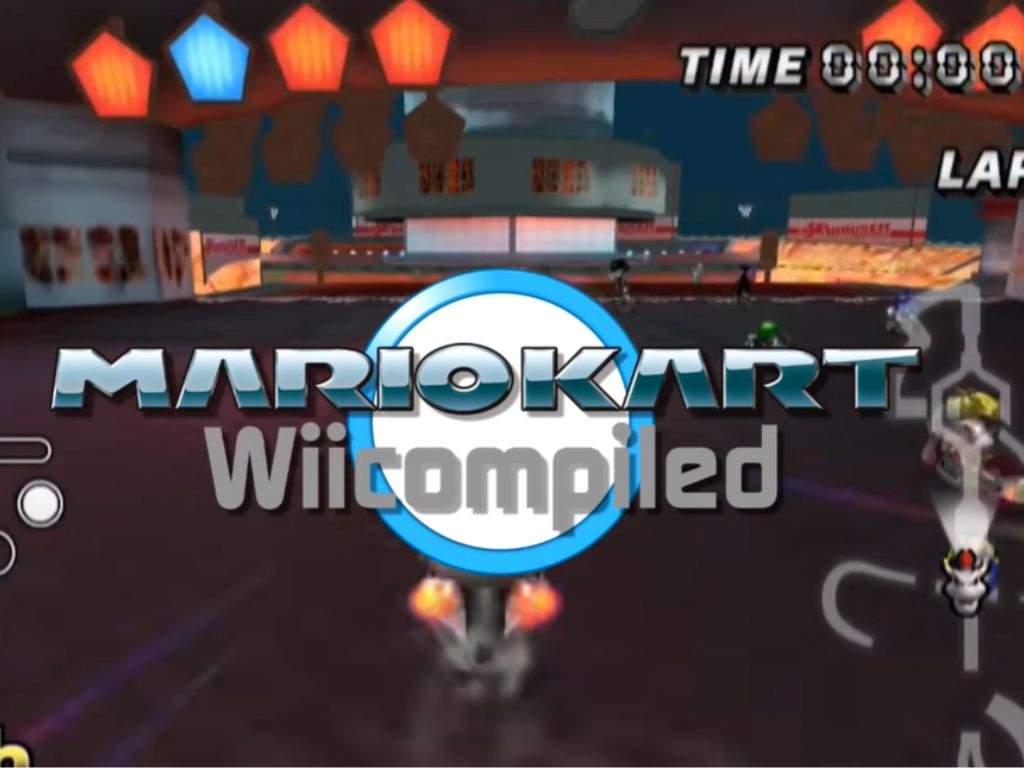
A native port of Nintendo's Mario Kart finally runs cleanly on PC, without emulation, with online play. But the use of AI to write part of the code divides the retro community.
The memory first
We remember the living room in 2008, at one of our houses, the white plastic steering wheel of the Wii in our hands, the cathode ray tube screen saturated with yellow-green on the Rainbow. Mario Kart Wii, released in Japan in April 2008 by Nintendo EAD, was the game that cut off family conversations for two hours. Since then, the Wii has aged, the Nintendo Wi-Fi Connection service has closed (May 20, 2014), and the game has remained frozen - except for those who tinkered with Wiimmfi (the community server) or Dolphin (the GC/Wii emulator).
According to an article by Notebookcheck (July 19, 2026), a native PC port called Mario Kart Wiicompiled has just been announced, with a beta scheduled for August 2026. Not emulation via Dolphin: a real port, which runs the game at 60 FPS with online play, and optional compatibility with over 200 Retro Rewind tracks. A technical feat - except for one point that grates.
The technical history
Mario Kart Wii ran at 480p on the Wii, with a target framerate of 60 FPS but often limited in practice (12-player race, object effects). A native port changes the game: the executable directly addresses PC drivers (Vulkan / DirectX), with rebuilt shaders, allowing full screen, multiple resolutions and - above all - netcode adapted to modern internet.
A port of this type is generally done by reverse-engineering the Wii binary (PowerPC format) and decompiling it into C or C++, as the community has done for The Legend of Zelda: Ocarina of Time (the famous « Ship of Harkinian ») or more recently for Super Mario 64. For Mario Kart Wii, this project had been underway for several years in a community decompilation project.
The grain of sand: generative AI
The point of contention, according to Notebookcheck, lies in an admission by the developer of Mario Kart Wiicompiled: he relied on generative AI tools for code writing - assistance with decompilation, rewriting PowerPC functions in C, or even designing the netcode. Nothing to do with textures: the controversy concerns the source code of the port itself.
Part of the community blames the team for this dependence on LLM (Large Language Models) assistants on a project historically dominated by manual craftsmanship - line-by-line decompilation, where each reversed function becomes a documentary stone for future projects. The risk, say critics: subtle bugs that escape review, or poor restitution of the original intentions of the Wii code. On the other hand, defenders recall that a well-driven LLM can speed up a titanic task, provided it is audited.
The debate echoes a broader thread that we are following: the tensions between supporters and opponents of generative AI in the free world. Torvalds recently ruled on the Linux kernel (it won't be an "AI-free" space), but each community must position itself. Here, it's not Linux, it's retro gaming - and a faction of the community considers that code written with AI does not have the same documentary value as hand-written code.
What we think
We salute the announced feat. A Mario Kart Wii in 60 FPS and playable online, that's the ultimate retro dream, and the 200+ Retro Rewind tracks add a dimension that no official Wii has ever offered. But the use of generative AI to write part of the code leaves us lukewarm: retro porting is not just about the result, it's also about living documentation. And a function written by an LLM does not tell the same story as a function handcrafted by a reverser.
Nintendo, we know, does not tolerate these community projects well: we can already imagine the DMCA procedures approaching (remember Nintendo vs Yuzu / Ryujinx). Wait for the August 2026 beta to form your own opinion - and judge for yourself whether the code, AI or not, holds up.
To remember
- Native port preservation remains the most elegant solution to emulation.
- Generative AI creates a new line of division in retro gaming - this time on the code of the port, not on the assets.
- Nintendo still doesn't like its games being ported elsewhere. Back up now.
Article produced by artificial intelligence, reviewed under human editorial control.