Harajuku: the 90-yen pop-up café is back - this time with a yogurt coffee
Japan 7 h agoAdd to bookmarks
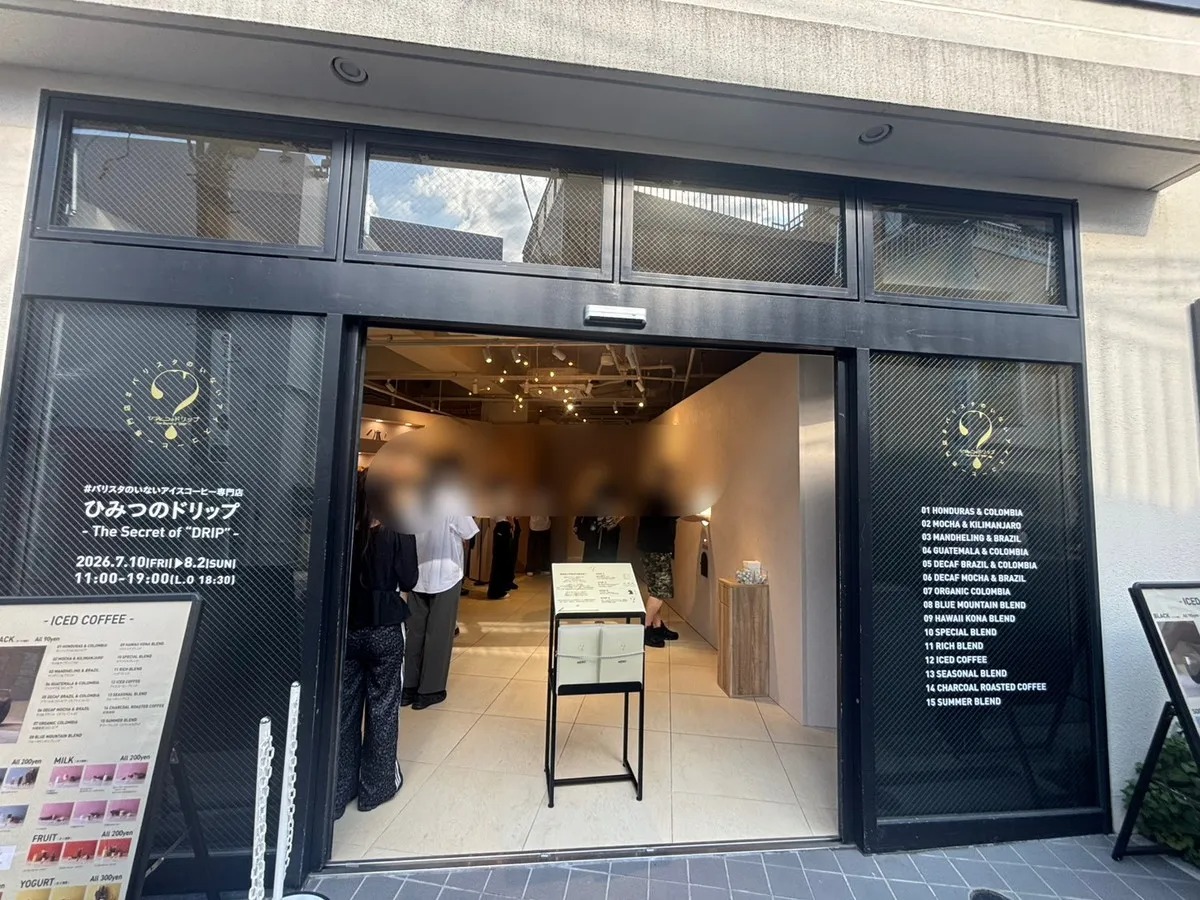
SoraNews24 reports the return of the 90 yen (~0.55 €) pop-up café in Harajuku (原宿, Tokyo). New star drink: yogurt coffee. Decoding a Japanese urban phenomenon.
The pop-up
After going viral last year, the 90-yen pop-up café is back in Harajuku (原宿, Harajuku, ward of Shibuya-ku, Tokyo). New signature product: the « yogurt coffee » (ヨーグルトコーヒー, yōguruto kōhī) - coffee mixed with liquid yogurt. SoraNews24 notes that the line on the first day was already going around the block.
Why it works
Three Japanese logics intersect here.
The ephemeral pop-up. In Japan, the 期間限定 (kikan gentei - "limited duration") format is a central cultural mechanism. The fact that a place has a known closing date creates a collective urgency to frequent it. No obligation to buy, just the guarantee that the pop-up will disappear. The principle is the same as for the seasonal kikan-gentei of convenience stores (kombini, コンビニ, convenience stores).
The low round price. 90 yen (about 0.55 €) is not only cheap - it's a price "below the psychological floor" for a coffee in Tokyo. A standard coffee ranges from 400 to 600 yen; a Starbucks tall latte, 495 yen. At 90 yen, we're no longer in the coffee - we're in a pure marketing experience, funded on the network effect.
Gastronomic curiosity. The yogurt coffee, recently popularized on Japanese Instagram, fits into a tradition of associations that Starbucks would not dare - the convenience store and Tokyo independents regularly explore crossovers (matcha-tomato, ume-cheese, sakura-vinegar) that disorient before becoming micro-standards.
The neighborhood
Harajuku (原宿), northeast of Shibuya, remains - despite the end of its ura-hara (裏原, "back-Harajuku") golden age of the 2000s - the laboratory of Tokyo food design. A pop-up often serves as a test bench before expansion into franchises or convenience store corners. Immediate proximity to Harajuku JR Station guarantees a colossal daily turnout.
A practice to observe
The "discount ephemeral pop-up" model is becoming the counter-culture of Japanese mass distribution. Where convenience stores standardize, these micro-local initiatives remind us that Tokyo remains, in 2026, the most lively city in the world for culinary hybrids. To be linked to the parallel revival of kissaten (喫茶店, traditional Shōwa-style cafés) and the "stand cafés" of Shimokitazawa.
To know before going
- Exact address and dates: to be checked on SoraNews24 (primary source) - the exact location is revealed on a weekly basis.
- Cash only, like almost all Tokyo independent pop-ups.
- Plan for 45 minutes to 1 hour of line on weekdays, more on weekends.
- One order per person: the usual rule for this type of kikan gentei event.
Article produced by artificial intelligence, reviewed under human editorial control.