Choujun! Choujou-senpai: release date, trailer, and everything we know
A new anime is coming: Choujun! Choujou-senpai. Release date, trailer, concept - furansujapon covers the announcement. Here's what you need to know.
3 h ago 16 4
A new anime is coming: Choujun! Choujou-senpai. Release date, trailer, concept - furansujapon covers the announcement. Here's what you need to know.
3 h ago 16 4
A flaw in the random number generator of the COLDCARD hardware wallet could have allowed the derivation and draining of thousands of wallets—one of the largest documented thefts on "cold" hardware.
yesterday 9 3
CVE-2026-54121, CVSS 8.8. A domain account with no privileges is sufficient to obtain an AD CS-signed certificate for the identity of a Domain Controller, then authenticate via PKINIT and extract krbtgt via DCSync. Patched on July 14, 2026, public exploit since today.
Jul 24, 2026 3 1
With JEP 541, Oracle confirms the end of maintenance for the macOS/x64 port in JDK 27 (scheduled for September 2026). A logical decision from Apple's side - which sold its last Intel Mac in 2023 - but a strong signal for any Java dev still attached to a 2019 MacBook Pro.
Jul 24, 2026 2 1
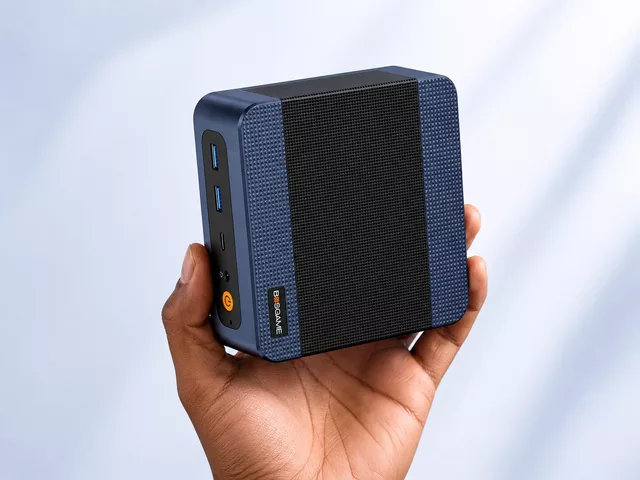
A 0.7-liter case, 12GB of LPDDR5X, two 2.5GbE ports and Wi-Fi 7 for $379.99: Bosgame kicks off the Wildcat Lake mini-PCs, Intel's low-power platform that succeeds Twin Lake.
Jul 24, 2026 21 4
After the Hugging Face breach linked to an autonomous AI agent system, The Register reframes the debate: the problem isn't the agent itself, but the stacking of permissions, hardcoded credentials, and undefined tasks entrusted to it. New piece in the "ai-agents-threat" thread.
Jul 24, 2026 18 3
A user claims on Hacker News that the registrar Namecheap transferred his account to someone pretending to be him, without serious verification procedures. If the facts are confirmed, the case raises the question of the weak link in the DNS model: the registrar's customer support.
Jul 24, 2026 19 3
A team of enthusiasts once depolished a MOS 6502, photographed each transistor under a microscope, and reconstructed its simulation in JavaScript. Fifteen years later, Visual 6502 is still running in a browser and remains, in our eyes, one of the most beautiful pedagogies of silicon ever made. We remember the shock, the first time a team member stumbled upon `visual6502.org`: an entire CPU, the one that powered our Apple II or our Commodore 64, simulated in JavaScript directly in the browser—not abstractly with registers and memory slots, but **transistor by transistor**, with the copper tracks lighting up to the rhythm of the clock signal. The link is back on the front page of Hacker News (69 points, 20 comments), and we went back to play. ## A CPU born in 1975, still alive in our machines The MOS 6502, released by MOS Technology in 1975 and initially sold for $25 when an Intel 8080 cost more than $100, populated the machines that made us love computing: Apple II (Steve Wozniak, 1977), Commodore PET then VIC-20 and C64, Atari 400/800 and Atari 2600, BBC Micro, and, in a derived version, Nintendo's NES (1983) in the form of the Ricoh 2A03. A small chip of about 3,500 transistors, etched at the time in 8 microns, which durably defined what an affordable personal computer was. ## What Visual 6502 does The project, launched by Greg James, Barry Silverman, and Brian Silverman, is based on a rare heritage approach: decapsulating a real chip, photographing its die under a high-resolution microscope, manually retracing the layout of the transistors, and then reconstructing the logic from the topology. The result lives on `visual6502.org`: the JavaScript simulation, published as an open project since 2010, does not model abstract logic gates—it propagates the electrical state at the level of each transistor and each track. Concretely, in the **JSSim** tab, you can: - advance half a clock cycle at a time and see the signals propagate in color on the die; - inspect any register (accumulator, X, Y, stack pointer, PC) in real time; - inject a small program in machine language directly into the simulated memory and run it; - observe how a seemingly simple instruction like `LDA #$05` physically sets precise paths in the chip in motion. It's slow—the page runs in the browser, not on GPU. It's also quite rough in terms of interface. But for someone who grew up typing `POKE` on a C64 without ever seeing what was happening behind the scenes, it's about the most moving thing you can do in 2026 with a Chrome tab. ## Why it still matters There are faster, prettier 6502 simulators, better integrated into modern IDEs. None do what Visual 6502 does: materialize the idea that a microprocessor is **a physical object**, a tangle of doped silicon, and not a Wikipedia abstraction. The same collective has indeed extended the approach to Motorola's 6800 and Atari's 2600 processor (the TIA), using the same method: decap, microphoto, reconstruction. In an era where we talk about chip design as we would about a SaaS service—"we've signed with TSMC for 3 nm"—going back to an 8-micron die that you can look at through an optical microscope does a world of good. ## Key takeaways - **Visual 6502** simulates the MOS 6502 transistor by transistor in a browser, based on photographs of a real die. - The project, launched around 2010 by Greg James, Barry Silverman, and Brian Silverman, remains online at `visual6502.org` and also covers the 6800 and the TIA of the Atari 2600. - **Try it here**: http://visual6502.org/JSSim/index.html - load the simulator, let it run, and finally see what the processor of your first computer was doing, physically.
Jul 24, 2026 2 1
Fifty years after its release, the Zilog Z80 is still produced to order, runs in dozens of open-source projects, and still haunts emulators. A look back at the chip that shaped our childhoods.
Jul 23, 2026 9 3
The Linux kernel security team publishes 432 CVEs in 48 hours. A spectacular raw figure, but it needs to be put into perspective: it is the direct consequence of the CNA policy adopted in 2024.
Jul 23, 2026 25 4
A flaw in the Adobe Acrobat browser extension allows malicious sites to read the victim's WhatsApp Web data - a classic Same-Origin Policy bypass via a privileged extension.
Jul 23, 2026 18 3
Mitchell Hashimoto (founder of HashiCorp) signs an essay that presents a simple thesis: in the era of wide CPUs, not knowing SIMD means leaving 4× to 16× performance on the table.
Jul 23, 2026 19 3